Our Activities

Report of the European Conference Bucharest 2025
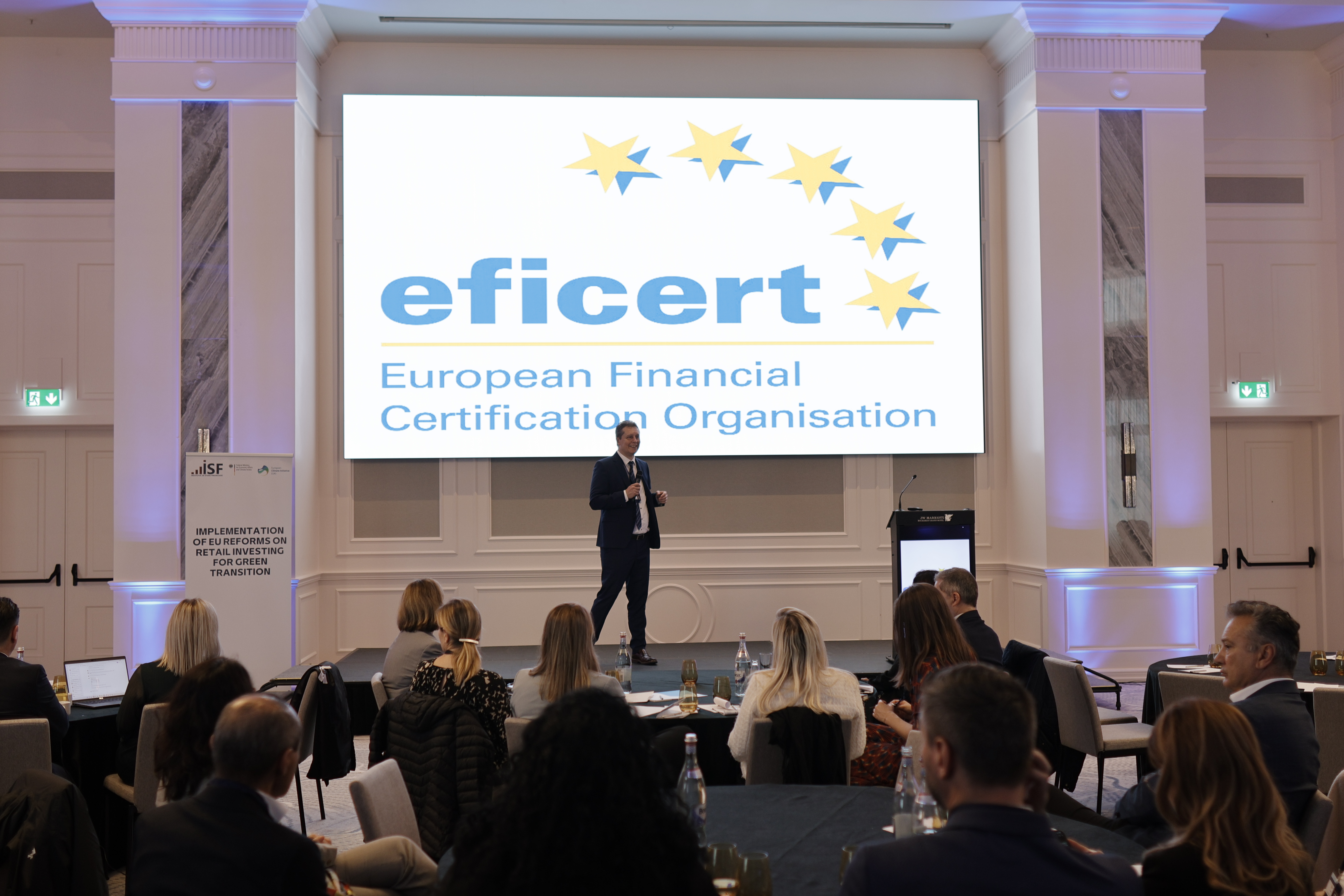
Three days of exchange, forward-looking insights, and international collaboration: From 12 to 14 November, the EFICERT European Conference and Annual Assembly brought together experts from across Europe in Bucharest.
General Assembly: Governance, Elections, and a Milestone Transition
The conference began with the formal part of the EFICERT General Assembly. Delegates reviewed and approved the annual budget, discussed key developments in accreditation and quality assurance, and elected the new Governing Board for the upcoming term.
After many years of dedicated leadership, Dr. Katharina Höhn stepped down from her role as President. Her longstanding commitment and tireless contribution were warmly acknowledged by the members. We are pleased that she will continue to serve on the Board as Vice President.
The presidency was handed over to Cătălin Câmpeanu (Romania), who brings strong expertise and fresh momentum to the role. We wish him every success as he takes on this responsibility and leads EFICERT into its next phase of development.
A Premiere: The Launch of EFICERT NextGen
A highlight of this year’s gathering was the inaugural participation of a new group of young professionals: EFICERT NextGen. Their goal is to contribute new perspectives, strengthen innovation, and ensure that cross-border collaboration remains a living part of EFICERT’s identity for the next generation.
This mission was actively put into practice during an interactive workshop on “Microlearning with the Use of AI.”
Using AI-supported tools, participants developed several microlearning storyboards on insurance-related topics. The session showcased how artificial intelligence can accelerate content creation, spark creativity, and support modern learning design.
Integrated Programme with the ISF International Conference
On the second day, the EFICERT Conference programme was integrated into the Romanian ISF International Conference. Through simultaneous translation, the international audience gained valuable insights into how the Romanian insurance and financial sector assesses the opportunities and risks associated with artificial intelligence.
The morning panels highlighted not only the technological developments but also ethical considerations, regulatory challenges, and the importance of human expertise in the age of automation.
Specialist Contributions from EFICERT Members
The afternoon featured practitioner-oriented presentations from EFICERT member organisations, highlighting a diverse range of national approaches to modern vocational education. Contributions included insights into the role of microcredentials in supporting flexible professional upskilling in Denmark, the development of robo-advisory models in Finland that demonstrate how human and automated advice can effectively coexist, and the German Insurance Academy’s (DVA) overview of its internal transformation project, which positions artificial intelligence as a partner in daily work processes and in learning and development. Together, these sessions illustrated both the variety of strategies across Europe and the shared challenges and ambitions shaping the future of professional training.
Cultural Programme & Networking
The conference was rounded off with a rich cultural programme. Participants enjoyed Romanian cuisine, warm hospitality, and a guided tour of the Museum of the National Bank of Romania, offering a fascinating look into the country’s financial history.
The networking opportunities throughout the three days strengthened existing partnerships and fostered new collaborations within the European community.
A Warm Thank You & Outlook to 2026
We extend our sincere thanks to the Romanian delegation for the excellent organisation, the thoughtful programme, and the gracious support throughout the event.
The host country for 2026 has already been selected — we look forward to seeing all our European colleagues again next year in Thessaloniki!
Magdalena Kammhuber, 29.11.2025
Finans Norge, the trade and employers’ association for the financial industry in Norway, did an interesting survey on the development of future skills. It shares its "Skills Check 2024" here with us. Find out what competences are most needed in the finance sector in the next 2-3 years and if Artificial Intelligence (AI) will reduce the need of competences altogether. Also: How many employees will need to have sustainability skills? Click and find out...
Click on the image to get to the skills check 2024, thankfully provided by Finance Norway
[14th November 2023]
By Catalin CAMPEANU, deputy chairman of the board of eficert
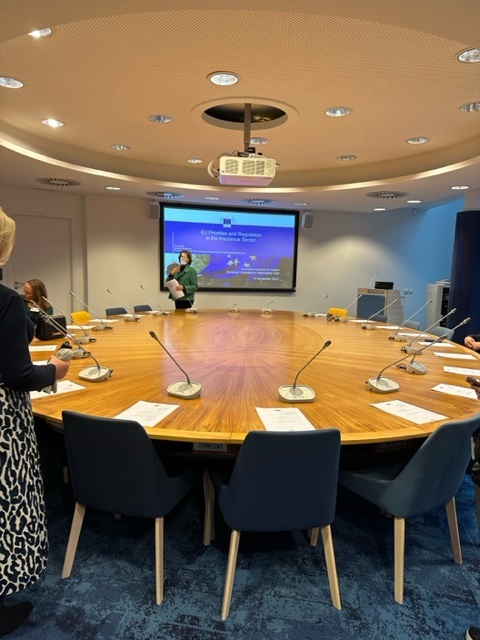
The future of insurance distribution, mainly the EU priorities and future regulation in the insurance sector were the main topics for the EFICERT Board Members' visit to the European Commission, Directorate General for Financial Stability, Financial Services and Capital Markets Union, on 14th of November 2023. Thus, very actual subjects like Solvency II review, Insurance Recovery, and resolution Directive (IRDD), Retail Investments Strategy (RIS) and, naturally, the Insurance Distribution Directive (IDD) review, were the most interesting and discussed. It is important to know that the Commission is actively involved in drafting a new directive, amending MiFID, IDD, UCITS, AIFMD and Solvency II, also a regulation aiming to amend PRIIP’s. The objectives are to strengthen the legislative framework to ensure that retail investors are empowered to take more informed investment decisions and are adequately protected by a coherent regulatory framework. At the same time, enhancing the trust and confidence along with the retail investors participation has been counted among priorities. Sustainability was also a very interesting subject, especially on targeting a better-informed consumer as for future new requirements on the integration of customer’s sustainability preferences in the suitability assessment and the fact that customers struggle to express their “sustainability preferences”.
Several aspects are currently targeted by possible change proposals from the Commission on IDD, considering that we already have more than five years of implementing and assessments behind us. Some of those, like the quality of advice and selling methods, precontractual information given to consumers, notably concerning the exact insurance coverage of a product and the known fact that practical implementation of advice and recommendations given by distributors sometimes tends towards formalism were also under the scope of EIOPA. Stronger common or similar legislative framework for member states is desirable as different professional training and certification systems are in place as, for example, a hot topic for debate could be the introduction of a certain type of examination to level the compulsory 15 hours of annual training.
The EFICERT board members have strengthen out, being on the same direction with the commission representatives, that further action towards common pillars of professional training and certification systems of Member States are to be analysed over the next period, even though some level of uncertainty may be generated by the fact that we will have new commissioners this year.
Above all it proved to be a very fruitful visit as the European Commission plans and priorities for insurance distribution are a fundamental pillar for EFICERT further development as an European Certification Organization, considering that the harmonization of the European Market requires uniform standards in certification and vocational education in the financial services and EFICERT is the largest professional and educational organisation for insurance intermediaries, claims handlers and underwriters in Europe.